
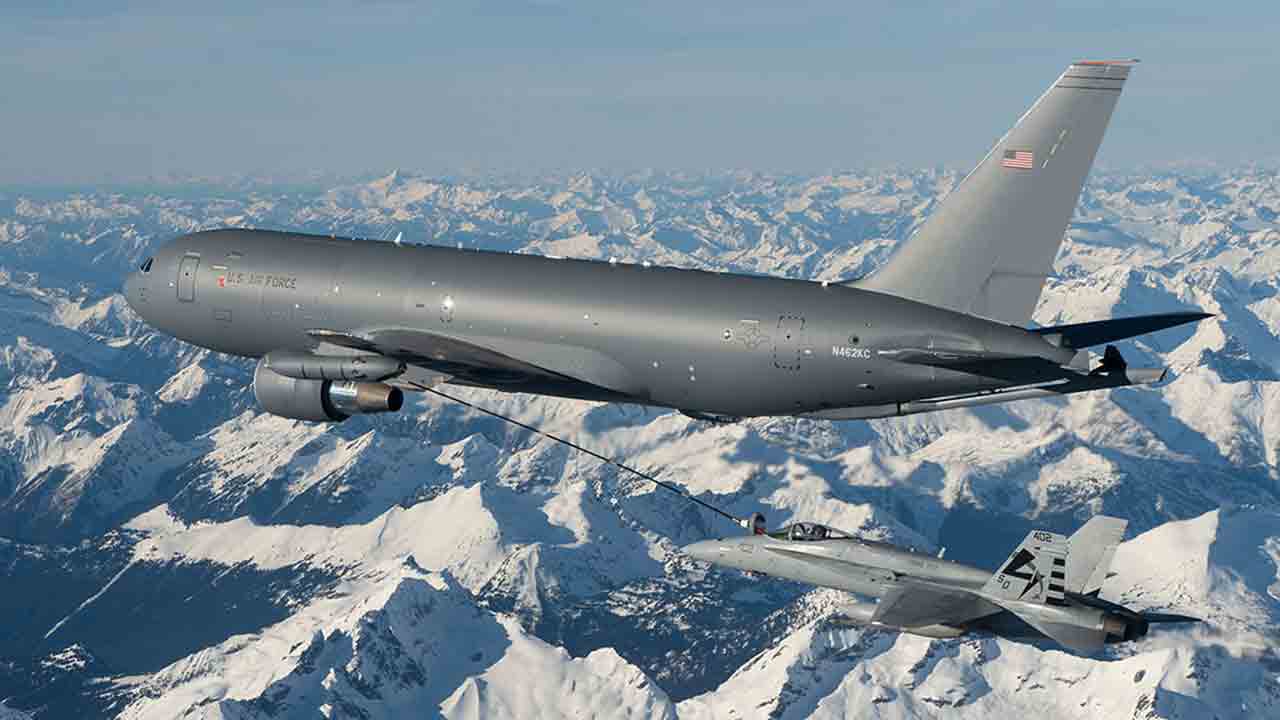
Designed to refuel aircraft in midair, carry cargo and support medical evacuations, the KC-46A Pegasus is one of the most important bets of the United States Air Force.
The KC-46A Pegasus marks a new phase in the modernization of the United States Air Force’s tanker fleet. Developed by Boeing, the model was created to gradually replace older aircraft, such as the KC-135, and expand aerial support capability in long-range military missions.
The KC-46A’s main role is aerial refueling, an essential operation to keep fighters, bombers, transport aircraft and other military planes in the air for longer. In practice, it works as a “flying gas station,” capable of transferring fuel to different types of aircraft during a mission.
What draws attention in the Pegasus is its versatility. The aircraft can operate with a refueling boom system controlled by fly-by-wire technology, as well as hoses and drogues. When equipped with wing pods, the KC-46A can also perform simultaneous multi-point refueling, increasing its usefulness in joint operations.
Another curious detail is found in the refueling operator’s station. Instead of relying only on direct observation, the operator uses panoramic screens that provide broad situational awareness, from one wingtip to the other. This allows more precise control of the boom, the central systems and the refueling pods.
But the KC-46A is not limited to refueling other aircraft. It can also carry cargo, passengers and medical teams. Depending on the configuration, the aircraft can carry up to 65,000 pounds of cargo, equivalent to about 29.4 tonnes, as well as accommodate up to 18 463L military pallets.
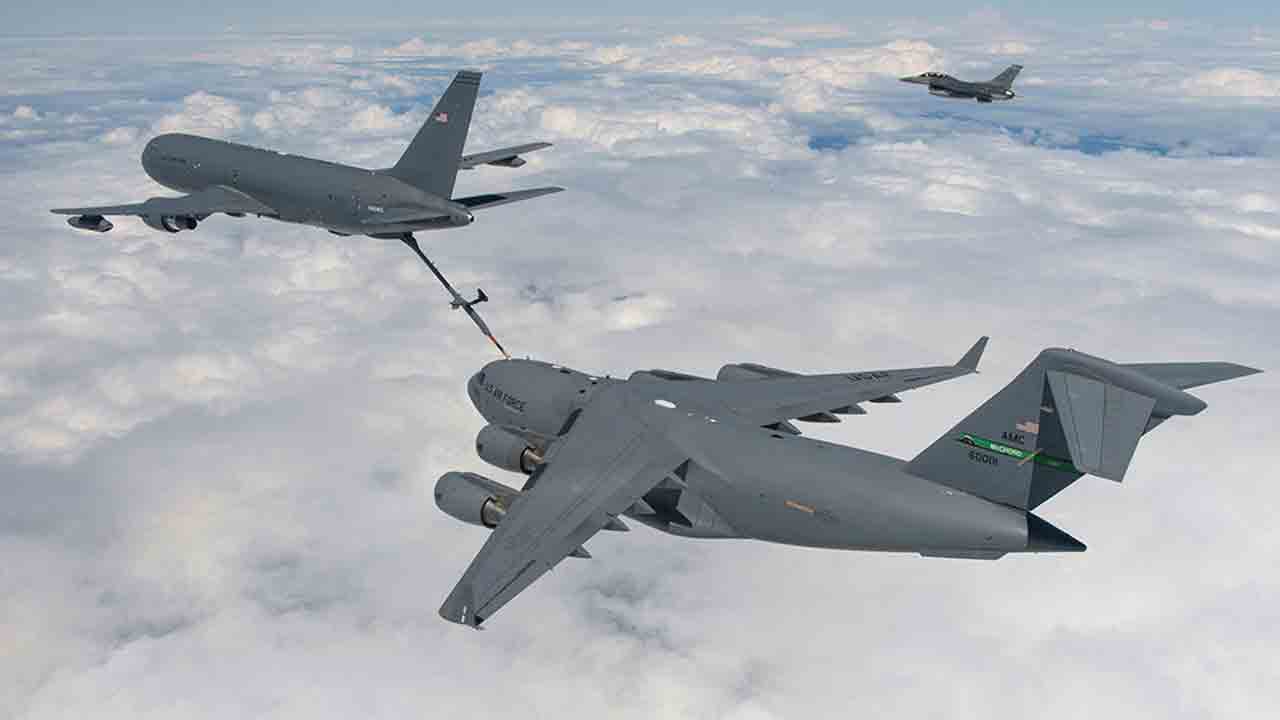
In aeromedical missions, the Pegasus can be configured to transport patients and evacuation teams, including flight nurses and medical technicians. This capability makes the aircraft useful not only in combat operations, but also in emergency situations, humanitarian support and strategic deployments.
With two Pratt & Whitney 4062 engines, the KC-46A can take off with a maximum weight of up to 415,000 pounds, approximately 188 tonnes. Its fuel capacity reaches more than 212,000 pounds, allowing it to support a wide range of aircraft from the Air Force, Navy, Marine Corps and partner countries.
The KC-46A program officially began in 2011, with the first flight carried out in December 2014. The first unit was delivered to McConnell Air Force Base, in Kansas, in January 2019. The contract provides for a fleet of up to 179 tanker aircraft for the United States Air Mobility Command.
In addition to refueling and transport capability, the KC-46A was designed with self-protection, communication and defense features intended to increase its survivability in contested environments. This characteristic reflects an important shift in modern military aviation: support aircraft also need to operate more safely in high-risk areas.
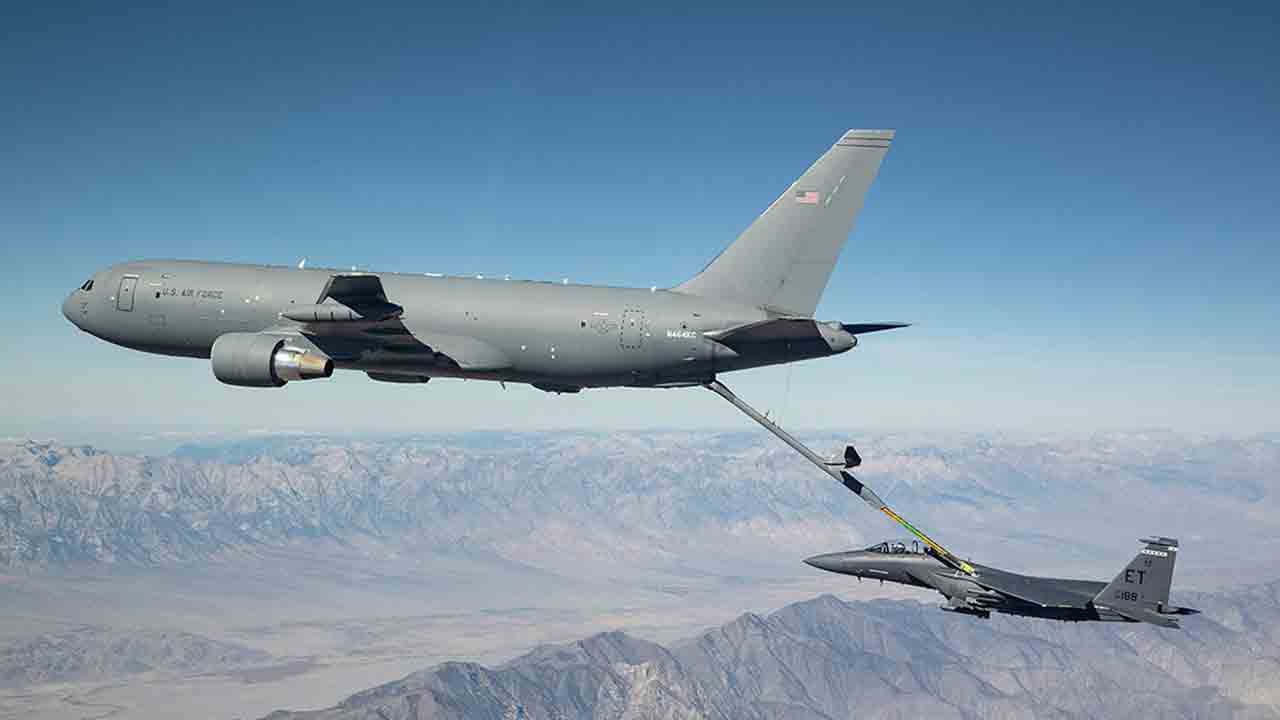
In the end, the KC-46A Pegasus represents more than a fleet upgrade. It shows how aerial refueling has become a central element of military power projection, allowing air forces to operate over long distances, sustain prolonged missions and respond quickly to different scenarios around the world.
+ Lithuania purchases 48 Merops drones and strengthens air defense against modern threats
Source and images: U.S. Air Force | Boeing. This content was created with the help of AI and reviewed by the editorial team.
